
REVIEW: −320°F
Review Date: 2nd July 2026 @Sadler’s Wells
REVIEWS
Kassy Fang
7/5/20263 min read
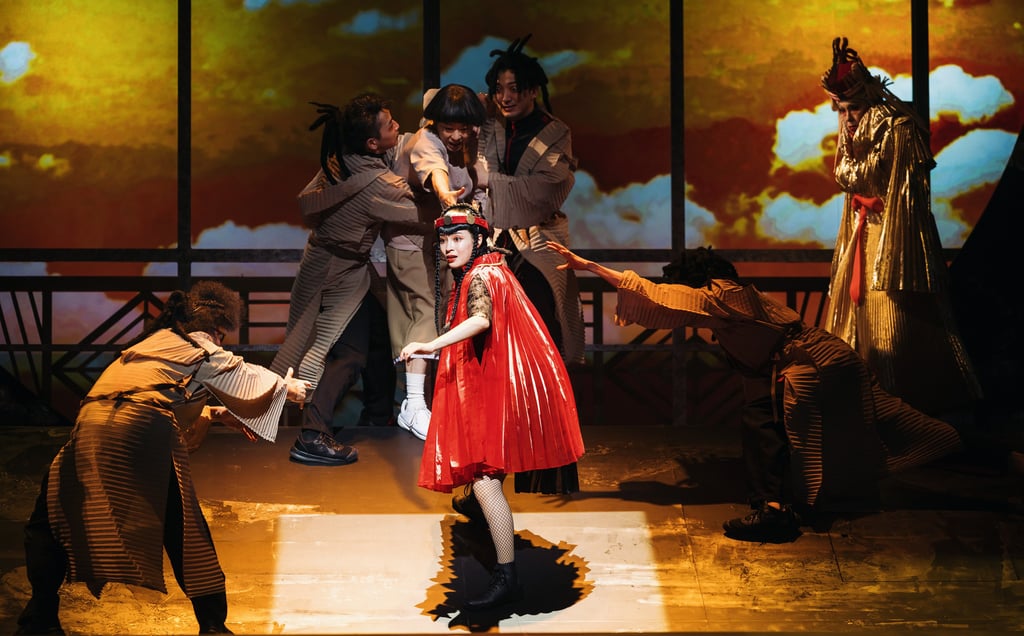
−320°F ©️Photo by Alex Brenner
Hideki Noda's latest work, which he both wrote and directed, is built in the dense, layered style that has become his signature. In −320°F, mythology, genetics, medieval legends, biotechnology, absurd comedy and relentless wordplay collide on stage. Instead of following a straightforward narrative, the play moves through history, memory and imagination, with characters and timelines continually overlapping.
At the centre of the story is the search for the legendary "Angel's Bone" and the idea of an "Angel Gene", linked to children who are born deaf and those whose bodies exist outside conventional ideas of normality. During an archaeological expedition led by a biotechnology professor, her assistant, whose life was extended beyond the age of fifteen through medical intervention, is determined to repay that gift by finding the mythical bone. However, their pharmaceutical sponsor believes it may hold the secret to youth and longevity.
As the expedition unfolds, the assistant himself becomes the centre of attention. The strange vibration in the bone of his right arm is believed to be connected to the Angel's Bone, unlocking a form of genetic memory that carries the company across centuries, from the present day to the medieval world and even further into ancient history. Beneath its fantastical premise lies a distinctly Faustian question: does humanity's endless desire to improve itself drive creation or destruction? At what point does scientific progress begin to undermine the very idea of life?
Physical theatre becomes the production's strongest storytelling language. Choreography (Shigehiro Ide) transforms bodies into animals, dinosaur skeletons, fossils, mountain ranges, angel wings and invisible structures that connect people across time. The performers' facial expressions also give every transformation remarkable clarity. Even when the narrative becomes deliberately disorientating, the movement remains compelling and provides an emotional thread through the intertwining timelines.
The production constantly reinvents its stage world. Set design (Yukio Horio and Mitsuhiro Akiyama), projection design (Taiki Ueda), lighting design (Motoi Hattori & Makoto Kitazawa) and sound design (Raku Nakahara) work seamlessly together, allowing a press conference to become a laboratory, an excavation site and then a mythical landscape with astonishing fluidity. These transitions are achieved through performers, props, light, sound and rhythm instead of elaborate machinery.
The visual world is equally distinctive. Costume design (Kodue Hibino) balances the production's multiple historical settings without becoming tied to historical realism, while beauty direction (Isao Tsuge) enhances the exaggerated theatricality of the characters and their transformations. Music (Marihiko Hara) moves effortlessly between tension, humour and moments of reflection, helping to bind together a production that constantly shifts in tone.
Sadawo Abe, Suzu Hirose, Eri Fukatsu and Hideki Noda himself meet the production's enormous demands with astonishing precision and stamina. Every line lands with clarity and conviction despite the relentless pace, and each transition between comedy, stylised movement and emotional vulnerability feels completely assured. As with many of Noda's productions, the stage overflows with visual invention, rich sound and endless curiosity. Some passages resist logical explanation, but the work never seems interested in providing tidy answers.
Although −320°F is one of Noda's rare ventures into science fiction, its central concern is deeply human. Noda has spoken about wanting audiences to leave the theatre carrying a question that cannot be answered, allowing each person to respond through their own experiences. That intention can be felt throughout the production.
The final scene strips everything back. After more than two hours of rapid-fire language, mythology, scientific speculation and theatrical excess, the performance settles into something intimate and deeply human. A deaf mother learns that her unborn child will also be deaf. She does not mourn the life her child may never experience. Instead, she speaks of the beauty of a silent world. It is one of the simplest moments in −320°F, and one of the most affecting. All the frantic movement and theatrical excess that came before gives way to stillness. Words disappear completely. The performers enact in silence, their hands repeatedly forming the sign for love.
After overwhelming the audience with language, myth and spectacle, Noda closes with a single gesture that communicates more than words ever could.
★★★★
This performance is running until 11 July at Sadler's Wells Theatre. For more information, please visit: https://www.sadlerswells.com/whats-on/noda-map-minus-320-fahrenheit/#book
Cast & Creatives
Writer and director: Hideki Noda
Set design: Yukio Horio
Assistant set designer: Mitsuhiro Akiyama
Lighting design: Motoi Hattori & Makoto Kitazawa
Costume design: Kodue Hibino
Beauty direction: Isao Tsuge
Music: Marihiko Hara
Sound design: Raku Nakahara
Choreography: Shigehiro Ide
Projection design: Taiki Ueda
Stage manager: Masataka Sesaki
Production manager: Kumi Odaira
Producer: Hiroyuki Suzuki
Surtitles: Jo Allan&Susan Hingley
Cast
Sadawo Abe, Suzu Hirose, Eri FukatsuKoji Ohkura, Shoko Takada, Yuri Kawakami, Satoshi Hashimoto, Hideki Noda, Isao Hashizume
Shinsuke Ando, Wataru Ohmura, Ayaka Kondo, Yuji Shirakura, Miki Tanimura, Haruka Tabana, Seiko Nakazawa, Tara Nakashima, Kurodo Hachijoin, Ayaka Hikima, Sotaro Fujii, NatsumiMase, Yuta Matoba, MISAKI, Masakazu Morita, Tomohiro Yoshida
Swing: Chiho Yokoyama, Masanori Kikuzawa
Sound Behind Curtain
A place for all Asian artists.
Your gift keeps the curtain rising for Asian creatives.
About
Contact
© 2026 Sound Behind Curtain. All rights reserved.
Terms & Conditions Privacy Policy