
REVIEW: My Neighbour Totoro - Amazing Puppetry, Magical, Melodious
Review Dtae: 18th December 2025 @Gillian Lynne Theatre
REVIEWS
Kassy Fang
12/31/20253 min read
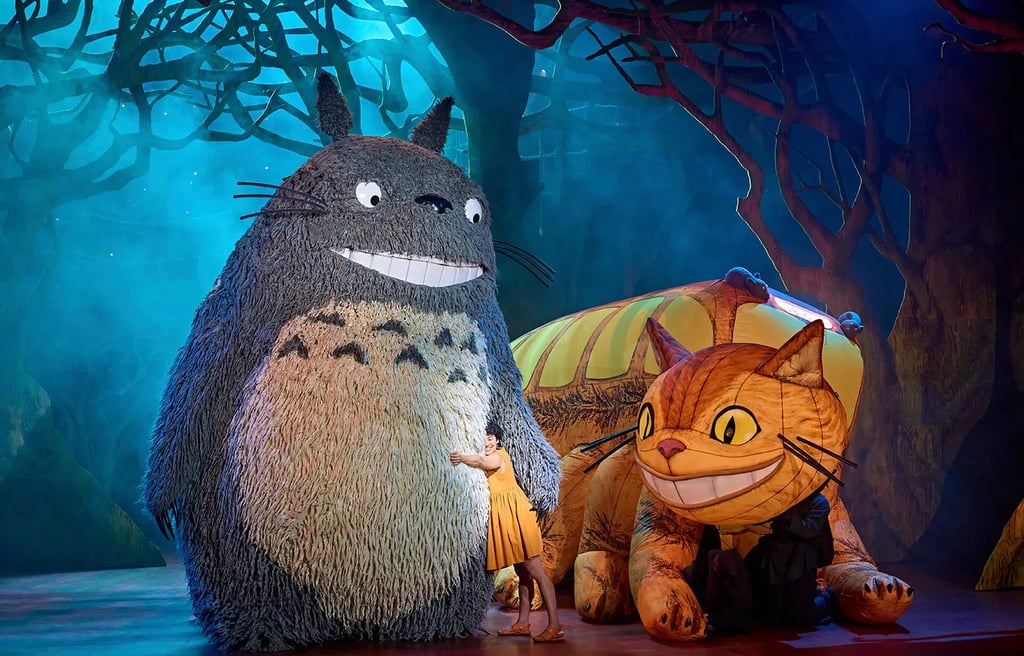
©️Photography by Manuel Harlan
Finally, I’ve seen it. As an ESEA kid, My Neighbour Totoro feels like a shared experience. The Studio Ghibli animation has long been a part of my childhood, and now, after its success at the Barbican, this stage adaptation brings something new to the West End. It speaks not just to the audience but to the people who create the dream we call theatre.
Directed by Phelim McDermott and adapted by Tom Morton-Smith, the production combines stunning puppetry by Basil Twist, vibrant set design by Tom Pye, and the iconic score by Joe Hisaishi, newly orchestrated by Will Stuart. These elements create a world where magic feels tangible, and the familiar melodies bring us right back into the heart of Totoro’s world. The result is a performance that immerses the audience in a world that is as much felt as it is seen.
The story of My Neighbour Totoro introduces a whimsical world where two young sisters embark on magical adventures in the countryside. As they venture deeper into the forest, they encounter mysterious creatures that inhabit the depths of the woods, a place where spirits are said to dwell. These encounters highlight themes of kinship, friendship, and growth, while also reflecting the effects of urbanisation on rural life.
The puppetry in the stage adaptation is truly remarkable. The Kazego Puppetry Ensemble skillfully brings each character to the stage, drawing from Japan’s Bunraku style. In this technique, performers wear all-black costumes, a gesture that honours the invisible tradition of puppetry, allowing them to blend into the background as they manipulate the puppets, adding to the enchanting atmosphere of the performance. However, they are not completely hidden from view. At key moments, they step into the spotlight to shift props, change scenes, or briefly take on the role of extras. This visibility becomes part of the performance, subtly reminding the audience that theatre is a collaborative effort. Behind the illusion, real people are working together to create the magic. Each movement, every gesture from the puppeteers, highlights the collective artistry that brings these characters to life.
The production offers moments where the line between reality and imagination blurs effortlessly. One example is the Catbus scene, where a large inflatable puppet bounces across the stage, carrying Satsuki and Mei on a journey through the city. As projections later shrink them down to a smaller-scale silhouette, jumping over the city skyline, the audience is drawn into a world where the familiar and the fantastical collide. Another striking moment occurs when Totoro lifts the girls into the air. Suspended on strings, the puppet spins with a steady rhythm, gradually rising higher above the audience. As it circles with increasing speed, it eventually shortens and disappears into the rafters, leaving the audience with the feeling that the characters have truly ascended and vanished. The combination of movement, soft lighting, and serene music creates an almost weightless experience, making it feel as though they’ve floated away, beyond reach.
The final moments of the show deepen the connection between the audience and the magic of puppetry. During the curtain call, the puppeteers step forward, recreating the gestures of the puppets they’ve just brought to life. They demonstrate intricate movements, like how Totoro raises his left hand or flashes a smile. This moment is like a bonus for the audience, showing how the magic is made piece by piece. Without the puppets, the puppeteers illustrate the actions and gestures that give life to the characters, offering a glimpse into the meticulous work behind the scenes. It’s a special moment that adds another layer of meaning to the world of imagination created on stage, reinforcing the idea that what we see is the result of countless hands working together to make it real.
★★★★★
For more information about this production, please visit: https://totoroshow.com/
Credits
My Neighbour Totoro was adapted by Tom Morton-Smith (Oppenheimer) from Hayao Miyazaki’s celebrated 1988 animated feature film; the production is directed by Improbable Co-Founder, Phelim McDermott.
Victoria Chen as Mei
Ami Okumura Jones as Satsuki
Dai Tabuchi as Tatsuo
Jacqueline Tate as Granny
Ai Ninomiya as the Singer.
Kazego Puppetry Ensemble: Rachel Clare Chan, Sally Cheng, Sabrina Pui Yee Chin, Victor Itang, Gabriel S Janoras, Anna Kato, Heather Lai, Ronnie Lee, Matthew Leonhart, Kumiko Mendl (Nurse Emiko), Annakanako Mohri, Lucy Park, Richard Peralta, Chloe Ragrag and Shaofan Wilson (Miss Hara).
Ensemble: Phyllis Ho (Yasuko), Steven Nguyen (Kanta), Jamie Zubairi (Hiroshi) and Deanna Myers (Tsukiko)
Swing puppeteers: Boaz Chad, Wenshin Lee, Amber Lin, Sera Maehara and Nathaniel Tan.
Director: Phelim McDermott
Senior Associate Director:コナント愛林 Ailin Conant
Casting Director: Hannah Miller CDG
Dramaturg: Pippa Hill
Production Designer: Tom Pye
Puppetry Designer & Director: Basil Twist
Costume Designer: 中野 希美江 Kimie Nakano
Lighting Designer: Jessica Hung Han Yun
Video Designer: Finn Ross, Andrea Scott
Movement Director: 山中 結莉 You-Ri Yamanaka
Composer: Joe Hisaishi
Orchestrator & Arranger: Will Stuart
Sound Designer: Tony Gayle
Sound Effects & Soundscape Designer: 張彤 Nicola T Chang
Adaptor/English Lyrics: Tom Morton-Smith
Producer: Kenichi Yoda
Executive Producer: Griselda Yorke
Executive Producer: Joe Hisaishi
Company Manager: Sophie Gabszewicz
Stage Manager: Duncan Parker
Deputy Stage Manager: Sharon Hobde
Assistant Stage Manager: Stephanie Hammersley
Assistant Stage Manager: Lauren Hitchen
Assistant Stage Manager: 查梓桁 Alex Jaouen
Assistant Stage Manager: Louisa Rose
Sound Behind Curtain
A place for all Asian artists.
Your gift keeps the curtain rising for Asian creatives.
About
Contact
© 2026 Sound Behind Curtain. All rights reserved.
Terms & Conditions Privacy Policy