
REVIEW: Tomorrow Will Be A Palestinian Day
Review Date: 1st June @Theatre 503
REVIEWS
Kassy Fang
6/2/20263 min read
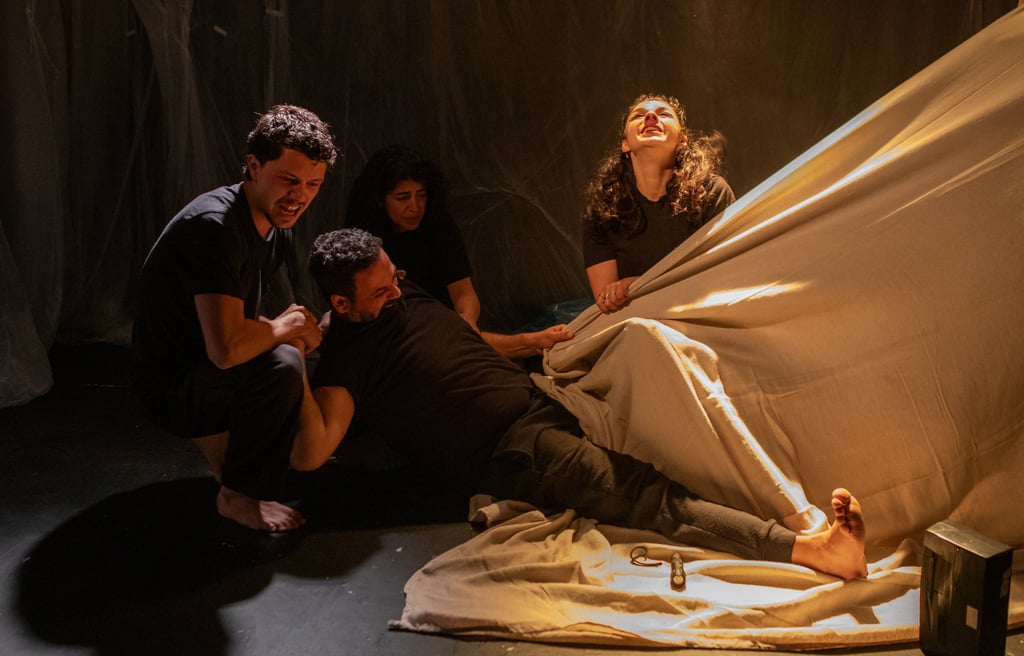
©️ Photo by Ali Wright
Directed by Ahmed Masoud and Micaela Miranda, Tomorrow Will Be A Palestinian Day brings together a collection of short plays by Palestinian writers, performed by an entirely Palestinian cast. Moving between realism, allegory, satire and poetry, the evening sketches a broad portrait of life, memory and survival across Gaza and Palestine.
Among the strongest pieces is The Last Letter by Mohammed Al Qudwa (translated by Mona Al-Khatib). Set in the last standing house on a devastated street, it imagines every undelivered letter arriving at the same address. Frustrating, heartbreaking and often darkly funny, the play gradually opens out into voices and messages from across the world. In Ruins by Jehad Abu Dayya (translated by Hassan Abdulrazzak), a refugee camp is a place of constant disruption. Families grapple with loss, displacement and the demands of daily survival, each trying to preserve fragments of ordinary life amid unstable ground.
Several plays focus on childhood and imagination. Santa Claus on Holiday by Nahil Mohana (translated by Katharine Halls) balances fairy-tale whimsy with a bittersweet view of children's dreams in Gaza. An extract from We Are... Doctors by Dareen Tatour explores a hospital that once belonged to Palestine and now stands within Israel. Through stories of medicine, memory and testimony, it asks who gets to tell the truth, whose histories are preserved, and what justice might look like.
The more poetic pieces are often the most visually striking. In The Piper by Hossam Al-Madhoun, performers use their bodies to create walls, pathways and barriers, moving in tightly choreographed formations that suggest both confinement and resistance. Similarly, an extract from The Martyrs Return to Ramallah by Walid Daqqa (translated by Julia Choucair Vizoso) imagines bureaucracy extending beyond death itself. One line lands with particular force: in death, every step requires another stamp; even afterwards, the paperwork never ends.
Perhaps the evening's sharpest critique comes in The Cage by Ali Abu Yassin (translated by Hassan Abdulrazzak). A young woman, paralysed and confined to a wheelchair, receives a procession of visitors: journalists, officials, aid workers and foreign representatives. Everyone arrives with sympathy, concern or carefully prepared words. Yet each encounter feels performative, more invested in being seen to care than in changing anything. She remains largely silent throughout. The silence becomes the point. The world already knows her story. What follows that knowledge?
A similar frustration runs through Five Minutes by Motasem Abu Hasan. Structured as a brief monologue, the speaker repeatedly reminds us that "London only gives me five minutes." As he begins recounting letters from prison and fragments of lived experience, the play cuts abruptly to darkness before he can finish. The ending lands like an interruption imposed from outside the story itself. It is startlingly effective.
Across the evening, eight performers dressed in black move fluidly between dozens of characters and situations. In the intimate space of Theatre503, moments of anger, grief and joy arrive at close range. Many of the stories echo images and reports already familiar through television broadcasts, news footage and social media feeds. What theatre adds is presence, with voices, bodies and emotions occupying the same room as the audience.
The evening closes with Dr Hope and the Lantern of Miracles by Imad Wahba. Amid occupation and bombardment, hope survives in the form of a small light carried by Dr Hope. As glowsticks are passed through the audience and gradually illuminate the darkened theatre, the gesture is simple but effective. After an evening filled with loss, absence and endurance, the production ends not with certainty, but with a shared light held briefly between strangers.
★★★★
For more information, please visit: https://theatre503.com/whats-on/tomorrow-will-be-a-palestinian-day/
Credits
Director: Ahmed Masoud & Micaela Miranda
Set Designer: Jeries Abu Jaber
Sound Designer & Composer: Dina Amro
Stage Manager: Jihan Rezeqallah
Assistant Stage Manager: Layal Muhtadi
Drama Therapist: Heba Zaphiriou-Zarifi
Cast: Ameena Adileh, Gráinnemir Abualrob, Jeries Abu Jaber, Luca Kamleh Chapman, Sama Rantisi, Sami Abu Wardeh, Sara Masry, Sofia Asir
Sound Behind Curtain
A place for all Asian artists.
Your gift keeps the curtain rising for Asian creatives.
About
Contact
© 2026 Sound Behind Curtain. All rights reserved.
Terms & Conditions Privacy Policy